FSH (Follicle Stimulating Hormone); a hormone secreted by the pituitary gland that ensures maturation of follicle in women and spermatogenesis in men.
A gamete implies male or female reproductive cell. These are eggs and sperms.
GnRH (Gonadotropin Releasing Hormone): A hormone that is secreted by brain and regulates the pituitary gland.
HCG (Human Chorionic Gonadotropin): A hormone secreted by embryo and used to diagnose pregnancy.
Hemophilia: A type of bleeding disorder. A disease characterized with inability to stop bleeding.
Hyperstimulation: Over-reaction of ovaries by hormones while ovaries are stimulated. In this case, ovaries enlarge and cysts develop.
Pituitary gland: A secretory gland that is located immediately beneath the brain and regulates most internal secretory glands.
Hysterosalpingography: An imaging modality that provides details about internal structure of the uterus and the Fallopian tubes.
HMG (Human Menopausal Gonadotropin): A medicine that contains FSH and LH to stimulate ovaries.
ICSI (Intra Cytoplasmic Sperm Injection): Injecting a sperm into an egg. It is also called microinjection.
Implantation: Implies adherence of embryo to endomentrial cells in the uterus and initiation of the pregnancy.
Infertile: A human who cannot achieve conception or cause failed conception of the spouse in a particular interval.
Infertility: Failure or lack of conception despite regular sexual intercourse of the couple with no contraceptive method for a year.
Incubator: A special cabinet, where the embryo is culture, temperature is maintained close to the body temperature and contains carbon dioxide at particular concentration.
Insemination: Implies inseminating the sperm into the womb or placing the sperm nearby the egg in order to achieve fertilization.
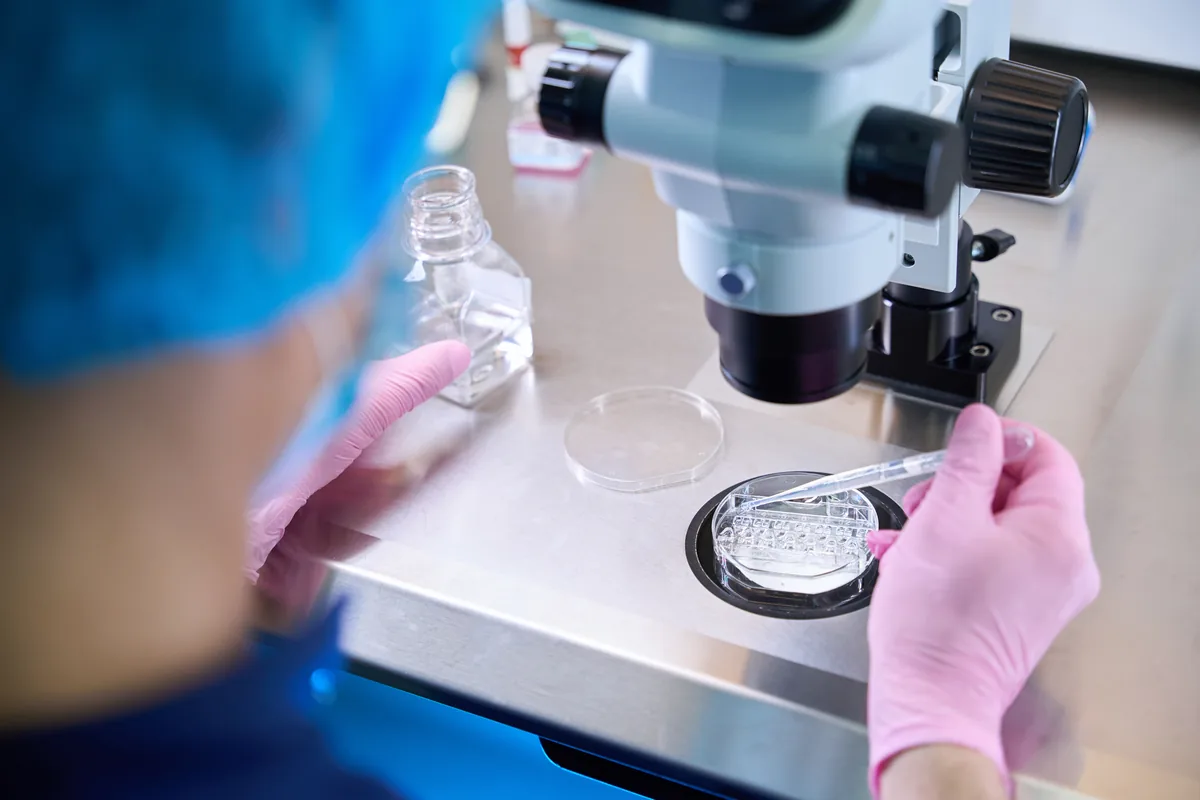
IVF (In Vitro Fertilization); Fertilization outside of the body.
Gynecologist; A doctor specialized in diseases and health of women.
Catheter: A thin, plastic tube that is used to place sperm and embryo.
Conception: A new creature arising out of the egg of female fertilized by the sperm of the male.
Cordocentesis: Taking a piece of tissue from the umbilical cord of fetus for examination.
Corpus luteum: The tissue differentiating from the follicle that leaves after the ovulation.
Chromosome: Genetic codes that are found in nucleus of each cell and ensure genetic inheritance. A human has 46 chromosomes.
Cryopreservation: A method used to freeze and store embryo.
Culture medium: A fluid that ensures growth of embryo at laboratory settings.
Laparoscopy: A surgical method used to visualize the abdominal cavity.
LH (Luteinizing Hormone): A hormone secreted by pituitary that ensures ovulation.
Masturbation: Self-stimulation to eject sperm.
Menopause: Pause of menses.
Micromanipulation: Methods used to place the sperm into the egg. Microinjection is the most common one of those techniques.
Microinjection: Injection the sperm into the egg.
Molecular biology: A branch of science dealing with intracellular structures.
Morphology: Determining shape and dimensions of sperm.
Oligospermia: Abnormally low count of sperm in ejaculate.
Oocyte: The female egg, female gamete.
Occyte pick-up: Implies harvesting eggs from ovarian follicles. A needle is inserted into the follicle and the fluid and the egg are suctioned out.
Ovary: A female reproductive organ.
Ovulation: Implies release of eggs that are mature enough for ovulation.
Estradiol: A female hormone secreted by follicle and corpus luteum.
Estrogen: It is principally produced in ovaries. The production starts with puberty and continues until menopause. It is also responsible for development of secondary sex characters.
PESA Percutaneous epidydimal sperm aspiration
Pipette: A thin glass or plastic tube.
Polycystic ovary disease: Formation of multiple small cysts in the ovary.
Polyspermia: An egg fertilized by more than one sperm.
Post-coital test: Examination of cervical fluid and the sperm ejaculated there after the intercourse.
Progesterone: A hormone secreted by corpus luteum.
Pronuclei: Nuclei that contain 23 chromosomes. One includes female chromosomes, while the other contains male chromosomes.
Semen: The umbrella term for the sperm and the fluid that comprise the ejaculate during the orgasm.
Semen Analysis: Implies determining number per millimeter, shape and motility of fresh sperm under microscope.
Serum: The fluid after blood is separated.
Cervix: This inferior part of the uterus protrudes into the vagina and enlarges while baby passes through the delivery.
Cycle: A time elapsing from Day 1 of menstruation to the initiation of the next menstruation. It takes approximately 28 days in human.
Sperm: Male reproductive cells.
Sperm bank: A place, where healthy sperms are frozen and stored in liquid nitrogen.
Sperm canals: Implies canals that sperms swim through and extend from testis to glans penis.
Spermatogenesis: Formation of sperm
Sterile: A human who will never have a baby.
TESA: Testicular Sperm Aspiration
TESE: Testicular Sperm Extraction
Teratozoospermia: Implies dominancy of sperms with morphological disorder.
Testis: It refers two male reproductive organs. They are found in a sac and produce the male sex hormone, testosterone, and the sperm, the male reproductive cell.
Testosterone: Male reproductive hormone.
In vitro fertilization: One of assisted reproductive techniques that ensure growth of embryo outside of the body.
Ultrasound: Visualizing internal organs using sound waves
Uterus: A muscular reproductive organ, the womb, that protects and feeds the embryo for growth.
Urologist: A doctor specialized in male urinary tract and genital disease.
ARTC: Assisted Reproductive Technologies Center
Varicocele: Enlargement of testicular vessels.
Viability: Determining the viability of the sperm.
Viscosity: The state of being sticky
Ovarian stimulation: Administering GnRh analogues, hMG and hCG to produce more than one egg.
Zygote: Early developmental phase of embryo.
Zona pellucid: A membrane covering the outer surface of the egg; the sperm penetrates into this membrane and ensures fertilization. This membrane should be peeled off in order to have the embryo implant into the uterus.